Showing posts with label MEMSPA. Show all posts

Saturday, September 5, 2020

#UnitedWeLead: Principals on a Mission


This past June a team of MEMSPA board members collaborated and became solution seekers and fighter starters to ignite not only a purpose but also create a movement to support our members, educators, and students of color. This group of leaders, even in the midst of COVID, worked to find ways to collect tinder and kindling to fuel a very important fire for the year. 

Through this brainstorming and planning, an event was ignited. Following all of the safety protocols and guidelines, principals came together to learn about ourselves, our biases, and how to lead and foster courageous conversations around race. Principals from around the state brought their own courage, vulnerabilities, and passions to join the mission to be and create change--to support each other and our school communities in extinguishing injustice and cultivating equity.

Through climate adversity of the cold rain and wind, hope was built on the words of our Black colleagues who inspired us through opening, mid-day, and closing remarks. We learned to get into the good and necessary trouble as Michael Johnson inspired us with John Lewis's words. We were awaken by the words of Detra Fields as she reminded us of all of the injustices that are still present to this day. Lastly, we were moved to be change agents by Jeremy Patterson as he demonstrated you can create waves with the smallest ripple.

Ripple was my word for the day, as we started out in small, masked, and socially-distanced groups/circles under tents around the MEMSPA property. I was hoping the day would create a ripple that would take leaders back to their buildings with confidence and tools to not forget about the important work we need to do even in the midst of COVID, virtual and remote learning, and other restrictions. This work cannot wait. 

The focus of the day was to provide experiences about self exploration and give a platform for having difficult, courageous, and honest conversations. We ended our day with commitments to continue this work. The heat from what we started that day is proof that #UnitedWeLead and #TogetherWeCan. 

Sunday, January 5, 2020

#OneWord2020: Growth

Choosing one word to guide a year is no easy feat. Furthermore, evaluating merit and accomplishments of that focus can be even a bigger challenge especially when you hope to have an impact on others.

I am a work in progress. I aspire to be the best version of myself.

My #oneword2018 was humanity, and while I worked to model selflessness, compassion, and kindness, I feel as though I can always work harder in this area. Charity work is not the only component of humanity. Empathy, acceptance, compassion, and grace are all key elements. I only hope that others feel that I model these on a continued basis.

Last year, my #oneword2019 was to inspire both myself and others to be the best versions of ourselves--especially through the power of relationships. I worked hard to push myself to explore my possibilities and am really proud of not only my own accomplishments but those of my family and friends. There were so many inspiring accomplishments in 2019!

This year, choosing my #oneword2020 was even harder as I reflected on the past two years. Several words came to mind, but I also used my future to help guide my choice. It is my goal in the next 2 years to advance my career to the district level. In preparing for that, I will be taking on a year-long, blended learning aspiring superintendent's academy. I will also continue to lead mentor trainings, and I am very excited to be working with NAESP (National Association of Elementary [and Middle] School Principals) and HDE (Hawaii Department of Education) to do my first National Mentor Training of the year this February. The last part of my professional growth goal, and most important, rests with my staff and students as we continue to make Milan Middle School a place where relationships matter, character counts, and people are empowered to be the best versions of themselves. My work is to help teachers, paras, and other staff make MMS the best place for our students by pushing us to all to grow. This year, we have learned that our work starts with making sure students are cared for and have their basic needs met. While this is a huge challenge, if anyone can do it, I know the amazing team at MMS can do it. We will do it together.

Personally, I hope to grow as well. I want be be healthier, and I want to be a better friend and family member as well as a better and kinder person to my self. I am not as good as extending grace, kindness, and forgiveness to myself as I am to others, and I am going to grow in this area as well. Self love is key as it is something that we model to others. I am so grateful to the many mentors, friends, and family that have been examples of amazing people who continue to make my growth and development possible. Continuing to have these cheerleaders, supporters, critiques, and mentors in my life will be key to my work this year as I grow. I am thankful to my supportive family members, my MEMSPA family, my MMS family, and all of my colleagues and friends who continue to inspire my to become the best version of myself.

Saturday, December 7, 2019

#MEMSPA19 Superhero Conference: Super Epic

Wow! What a conference....the best one yet. I have been so fortunate to be a part of the Michigan Elementary and Middle School Principals Association, and serve on the board for the past six years. It was thirteen years ago where I connected with now president, Michelle Allen, who took me in and truly made me feel like I didn't make the biggest career mistake by taking on the principalship. Fast forward to the present day, and the entire MEMSPA family (office staff, our amazing executive director, the board, our LM facilitators/coaches, my region leadership, and the entire amazing network of members continue to inspire me to be a better leader. I always leave the conference with ideas to put into practice to help support my staff and students. This year continued the trend. Not only did the people and experience fill my bucket, but the new knowledge and reminders were just what I needed during this challenging year.


Takeaways:

This year's theme was a great one. We have so many super principals, and the themes that I am taking away this year include relationships, whole child, and self care.

Sanfelippo reminded us how important it is to making the "awe" moments visible to others. His examples and practices are one of the most crucial elements to helping change the story in education. Throughout all the sessions, relationships were a common theme. Positivity Project leaders discussed how their work has transformed their schools and relationships with and among all stakeholder groups.

Also the theme of the whole child was evident in several of the sessions. John Maxwell's quote: "Students don't care how much you know until they know how much you care" is even a greater reality now. We need to start with important basic skills that students are lacking before even tackling the curriculum. Ben and his amazing team from Warner shared their practices to be champions for kids and how PBIS earnings that involve time with adults is so valuable (and free!). We need to have positive interactions with students (and staff) every single day. In the last 30+years, empathy has decreased 40% while narcissism has increased 30%. What are we going to do about this? I learned from Domagalski, Weldon, and Swegles that empathy has to be a part of every curriculum. It's a must have for a better school culture--and for a better world! It's not one more thing on the plate. It is the plate. I also learned from Allen that we need to work to flip our tier support triangle and ways to do just that.

Trust with students and staff is so vital. Dr. Anthony Muhammad reminded us of this in his keynote. He also reviewed the change process and making sure that we have a rational system that includes the Communication: why (cognitive), Trust: who (emotional), Support/Capacity: how (functional), and the Accountability: do (return). Healthy cultures are a mutual relationship which includes a balance of support and accountability. He reminds us that ordering people to change doesn't work, but neither was leaving them alone.

Self care and teacher care were also hot topics, and several ideas are swarming in my head on how to better support our staff and selves in addition to our students. Our infamous Dr. Debbie McFalcone reminds us of our own self-awareness and the impact of our emotions as well as the importance of feedback.  Dr. Marcia Tate shared research on the order of change (along with some amazing presentation protocols). We need to be better about our attitudes as leaders and educators, but our behaviors are even more crucial. Order of change: leader/teacher behaviors, student outcomes, then in time leader/teacher attitudes. Interesting order of change: BOA: Behaviors, outcomes, attitudes. We start by changing our own behavior. She also reminded us that laughter will add 10 years to our lives. I need to laugh more!

I was excited to present on my leadership vision of #LeadPositive, and I feel very honored being recognized this year by region 2. My success comes from the wonderful professionals on my team. I am very fortunate to have caring and dedicated professionals with me--supporting our kids.

Shout Outs:

Region 2 principals, especially those in Washtenaw County who serve on the regional board, have been amazing supports and partners in our efforts to bring the benefits of MEMSPA to our region. You all are my forever friends, and I love you immensely.

Several principals were honored during the conference, and I am very excited to see Amie McCaw recognized as our Michigan Principal of the Year. She leads by example in not only her amazing school but also the state as a whole. She has worked the last several years to secure and offer meaningful, thought-provoking PD for MEMSPA principals. Congrats, Amie!

In addition, I am honored to call Madame President, Michelle Allen, my mentor and friend. She did an amazing job this week leading and celebrating principals. Thank you, Michelle! Thanks for all of our past presidents as well. We have a long line of mentors and MEMSPA supporters.

Thank you to our lovely Leadership Matters facilitators, Debbie and Derek! Your love, passion, enthusiasm, and care for our members is like no other. We are all better leaders because of you.

Other faces of MEMSPA include Allyson Aspey, David Simpson,  Jon Wennstrom, Ben Gilpin, Jeremy Patterson, and our very own rockstar, Mike Domagalski. Your leadership, advocacy, support of others and our growth in the profession are unmatched. Thank you for your leadership and most of all friendship. The entire board and region representatives are truly assets to not only the organization but the profession as a whole. Thank you!

Lastly, the MEMSPA office needs recognized for the countless hours, thought, and details that went into making this conference EPIC! Thank you Annette for your 30+ years of service and making sure that everyone and everything are perfect. Taryn--thank you for your tech superpowers, details, and unflagging support of MEMSPA and principals. Syndee--you have been an amazing addition to our organization. Your contacts, drive, vision, and most of all, your caring, loving personality for all of our members have been evident. Last but not least, Paul. Your mentorship, vision, care, and connections have been the face and heart of MEMSPA. Thank you for putting so much time, and most importantly, love, into our association.

Wednesday, July 17, 2019

Summer of Learning...and Sharing

This has been an exceptional summer so far! Getting time to just reflect and write about it has been a challenge. Just two weeks ago, I returned from China. Through AASA (The School Superintendents Association), I was able to visit 5 institutions (bureaus, institutes, and associations), about six different schools, and partake in several amazing cultural experiences.
AASA Discover China Experiences
This experience was like nothing that I have ever encountered, and I am so grateful to Triway, AASA, and the hosting institutions for giving me such an amazing journey. Not only did I learn about the Chinese culture and education systems, I also learned from my new friends and colleagues, the other Discover China delegates from Alaska, Arizona, and Pennsylvania. I was able to share about Michigan with the lens of MEMSPA (Michigan Elementary and Middle School Association) and MAS (Milan Area Schools) and meet other middle schools to bridge learning possibilities on both ends. I have so much respect for the Chinese culture, and I can only hope that we put the respect back into education that they have kept alive for thousands of years. Educators are highly respected. I learned 5 Chinese values at a tea ceremony that I attended: Sky (God), ground (Earth), emperor, parents, and teacher. Teacher is one of the main values which surprised and impressed me more than anything else. I love this notion and can only hope that our culture can adopt this practice. Our educators deserve this respect for all they do.  I was also impressed with the facilities, architure, and technology in China. All in all, we have a great deal that we can learn from one another, and I hope that this experience has opened some doors to doing just that.

Just three days after returning from China, I was back on a plane heading to the NAESP (National Association of Elementary (PreK-8) School Principals) national conference in Spokane, Washington. I was excited to connect with my MEMSPA family from the past decade and NAESP network from the past five years. I really enjoy spending time with our executive director, Paul Liabenow, who models servant leadership. I also appreciate seeing my mentors, Debbie McFalone, Derek Wheaton, Eric Cardwell, Chuck Shultz, and Michelle Allen, and friends/colleagues Ben Gilpin, Jon Wennstrom, Aime McCaw, Molly Funk, and our rainbow of Serendipity, Allyson Apsey. In addition, I was able to connect with other state reps and even some social media connections. 
Session Presentations and MEMSPA PLN
My conference started early with the NAESP Mentor Train the Trainer session. I was honored that I was asked to lead the training. Over the past nine months, I worked with a team of eight other principals under NAESP and Collaborative Communications to help revise and update the Leading Learning Communities publication. I am so impressed with the feedback they took and the model, pillars, practices, and priorities that make up the book. In addition, it is filled with relevant resources and supports for all principals no matter where she or he is in her or his profession. The great thing about the session is that there were so many trainers in the room that the conversations were rich and I learned a great deal as well. In addition to the pre-conference full day session, I has three sessions to present at the #NAESP19 conference.

What was I thinking when I put in four proposals? I was trying to increase my chances of presenting the the national level. Last year was my first year presenting at NAESP, and I loved it. I have been presenting with MEMSPA for about 10 years now and presented nationally as a teacher.  I really enjoy public speaking and teaching just as much as I enjoy learning. Little did I know that three of my sessions would be selected for the conference. Needless to say, I had an exhausting week. In addition to my four presentations over the course of the 4 days, I also attended 8 additional sessions and truly appreciate the learning and the takeaways from so many speakers. Both Razia Jan and Ryan Sheehy (@sgeegrtw) reinforced my belief that it all starts with one and one person can and does make a difference. Jennifer Kirksey knocked it out of the park with her restorative practices background and resources. Amazing authors Allyson Apsey (@AllysonApsey) and Dr. Brad Gustafson (@gustafsonBrad) shared some tips on publishing and more importantly shared the struggle to get where they are today.  Rejection is a part of the learning and journey to success. Fullan kept us focused on the research and Kwame Alexander finished the conference off by motivating us and proving we can and do make a difference. Through failures and successes and connections with others around us, he left us with a powerful message to advocate for our kids and to work to make a difference. 

Now in just five days, I am back at the airport, but looking forward to our family vacation to Australia. Our daughter, Sydney, leaves for MSU soon, and I our son, Xavier, is heading into his junior year. Where does time go? Here's to hoping it slows down as I focus the next few weeks on what matters most in my world and the foundation to make all the learning and accomplishments posted above even possible. Open your hearts and minds and the foundation to do great things is built. I am blessed to have my family's support through it all. 

Saturday, December 8, 2018

#MEMSPA18 Takeaways: Inspired to Be a Better Leader!

My mind has been nonstop! The annual MEMSPA conference with the theme of Lead Positive was a megahit and has been my favorite one so far! The MEMSPA executive office and conference planning committee delivered an outstanding 3 days of professional learning, connecting, and inspiration.

All of the keynote speakers inspired us to be champions for our students and staff: Sean Covey, Paul Liabenow, Shelia Alles, Kim Campbell, and Jimmy Casas. Sean Covey reminded me to focus on the "wildly important" and focus on the lead measures to get us there. Paul Liabenow reminds us to lead with heart, and he models just that. Kim Campbell had me laughing and reminded me of the importance to laugh with our students and to never give up on them. We need to share our stories and our lives with our staff and students. We have to lead joyfully and laugh to survive. We have to get our students moving and challenge their thinking. All of these are great messages and reminders. The last keynote, Jimmy Casas, resonated with me the most this year.

Engaged in Jimmy's words, I laughed a lot, but I cried as well. He is so right; being a school leader is a difficult job. It is so rewarding, but it is extremely taxing on us personally. It is because of the people in my life and more importantly my family, that I have even made it to where I am and to still be here standing 13 years later; however, I was reminded that I cannot do this work at their or my expense. The past is now the past. I cannot change the fact that I wish that I were a better leader, or importantly, that I wish I were a better wife or mother. My husband and children have sacrificed a lot as I have tried to become the leader I feel my students and staff deserve. They deserve my best and full self as well. This is my personal goal for 2019 and beyond: be a better family member. I know that I can do just that because of all of the wonderful professionals and staff that I have around me in Milan and the state.

Casas's keynote was a great reminder that we need to capitalize on all of the people around us to do this difficult, but amazing work together. We need to remember our purpose and our core principles. The way we create excellence is to live it. We need to build a community of excellence to help get the work done.

My four core center around my leadership vision to do the following:
1) Lead with Positivity (#LeadPositive)
2) Inspire Greatness (Inspire others to be great)
3) Love, Laugh, and Learn
4) Hold High Expectations (Never expect more than I personally give).

In addition, I learned from several amazing breakout sessions too! Derek Wheaton gave me tools and reminders to help win over and support our next generations of leaders. David Simpson demonstrated how to hack deeper learning at the middle level. Jonathon Wennstrom inspired me to leave no teacher behind with a toolbox to support a variety of types, and Allyson Apsey reaffirmed our work to make sure we are telling the positive stories of our schools.

Presenting two sessions this year was a lot of fun, and I so enjoyed teaming up with Kimberly Gillow to speak about building and supporting positive team collaboration. I also felt privileged to share the positive work we do at #PowerUpMMS.

Connecting with my Leadership Matters cohort at the reception was nice and collecting toys for the Children's Leukemia Foundation of Michigan's Farmington Hills and Grand Rapids locations was a rewarding way to give back. Our region enjoyed a dinner together, and it was great to catch up with friends we have made over the last 10 years. As always the leadership banquet is one of my favorite highlights from the conference; all of the region nominations and the state winner are such an inspiration. I am inspired to be a better leader--mom and wife too! Thank you MEMSPA!


Saturday, September 29, 2018

Why MEMSPA?

Why MEMSPA?

Michigan Elementary Middle School Principals Association has been my number one network for sustaining my commitment to education, my staff, and most of all my students.

I first joined the association as a recommendation of one of my education leadership professors over a decade ago. Now even more than ever the liability insurance is crucial to leaders in education. However, the association has given me so much more than a peace of mind.

The answer to Why MEMSPA? might be different for everyone, but I can say without doubt that members number one answer is the support from the MEMSPA office and its members. My MEMSPA colleagues have been the most supportive group of professionals that I could ask for. The support showered over me has taken me from the island of isolation to a community of family and friends. Whatever I have need: encouragement, support, information, guidance, or even a needed fact check or reality call, I have always been able to count on this network of principals from around the state.

In addition to this network of fantastic leaders, the professional learning opportunities are by far the best. Sustained, engaging, research-based, and relational offerings, such as the annual conference, summer institute, workshops, and my favorite--a nine month leadership academy, Leadership Matters--have given me the tools, connections, examples, and accountability needed to advance my building, district, and career.

In addition to the people and the learning, MEMSPA has also given me the opportunity to give back. From involvement at the regional level, my presidency of the state level, and now my national role, I have enjoyed volunteering, presenting, writing, and mentoring others.

Why MEMSPA: to have support, to support others, and to fill my bucket! If you are a member, what's your WHY? If not, what are you looking for? I am sure you will find it with this association.

Monday, July 16, 2018

#NAESP18 Takeaway Themes: Get Involved, Give Back, and Work Smarter...Not Harder

      I am beyond excited about this year's NAESP conference! This was my fifth year attending the national conference, and 2018 was the best yet. I am a firm believer that we get out of life what we put into it, and learning is no different. After becoming involved at the state and national regional  levels, I started to ask myself what I can do to get involved even more,  how I can give back to such an amazing organization, and how I can increase my own learning to grow as well. This year, I was able to do all three.

     As NAESP State Rep for MEMSPA, I love sharing the value of the membership and all the state and national organizations have to offer. Attending the national conference, participating in professional Twitter Chats and NAESP Webinar Wednesdays, and keeping up with the NAESP publications keeps me connected and involved. I have enjoyed meeting all of the other state representatives and principals from all of the states. This year I was also able to serve on the Professional Learning Advisory Council and present a general session on The Power of Positivity.  I was able to spend time with some great administrators not only from Michigan, but around the world. These ways are avenues to get involved but also give back.

     After three years of submitting proposals, I was finally accepted to share with others how leading through positivity has so many benefits. It was great being able to share out ideas and learn from others. Before the conference, my daughter and I participated in the 10th Annual Community Playground build at Catalina Elementary. This was such an amazing experience as we came together to provide a playground and garden for the school. This was just the start of a fantastic three days! I was fascinated with Sal Khan's story and the creation of Khan Academy which is an inspiring story about giving back and supporting others.

     The learning was amazing and hit on several topics to help us as leaders to focus on what is important and work smarter, not harder. Sean Covey opened up with this message about the importance of relationships and that we cannot expect to see change if we ourselves do not change. Covey also spoke about WIGs (wildly important goals) and keeping scoreboards for those goals, including student tracking. Daniel Pink talk about about his research and points from his latest book When. His research proves that our cognitive abilities change throughout the course of the day and while peak performance times may vary, usually the morning or beginning of the day is our best time to perform analytic tasks, while the afternoon or "trough" time is best for administrative type tasks. During our recovery (last afternoon into the evening) is best for insight. He also confirmed how beneficial breaks and synchronization (especially choral singing) are to our productivity.

    I learned about articulating my leadership vision and helping move teachers from super stressed to super stars. I was also inspired by Beth Houf to lead like a pirate: passion, immersion, rapport, ask/analyze,  transformati, and enthusiasm. We wrapped up the conference with words from Jackie Joyner-Kersee about making sure we see and support the potential in others. She also spoke about the importance of grit, work ethic, and planting seeds in our children. It's always great to make more connections, share and learn with others, and get inspired for a new year! Thank you, NAESP!


Sunday, December 10, 2017

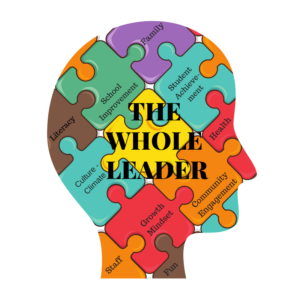
#MEMSPA17 Takeaways: Whole Leader Theme Delivered

Media preview
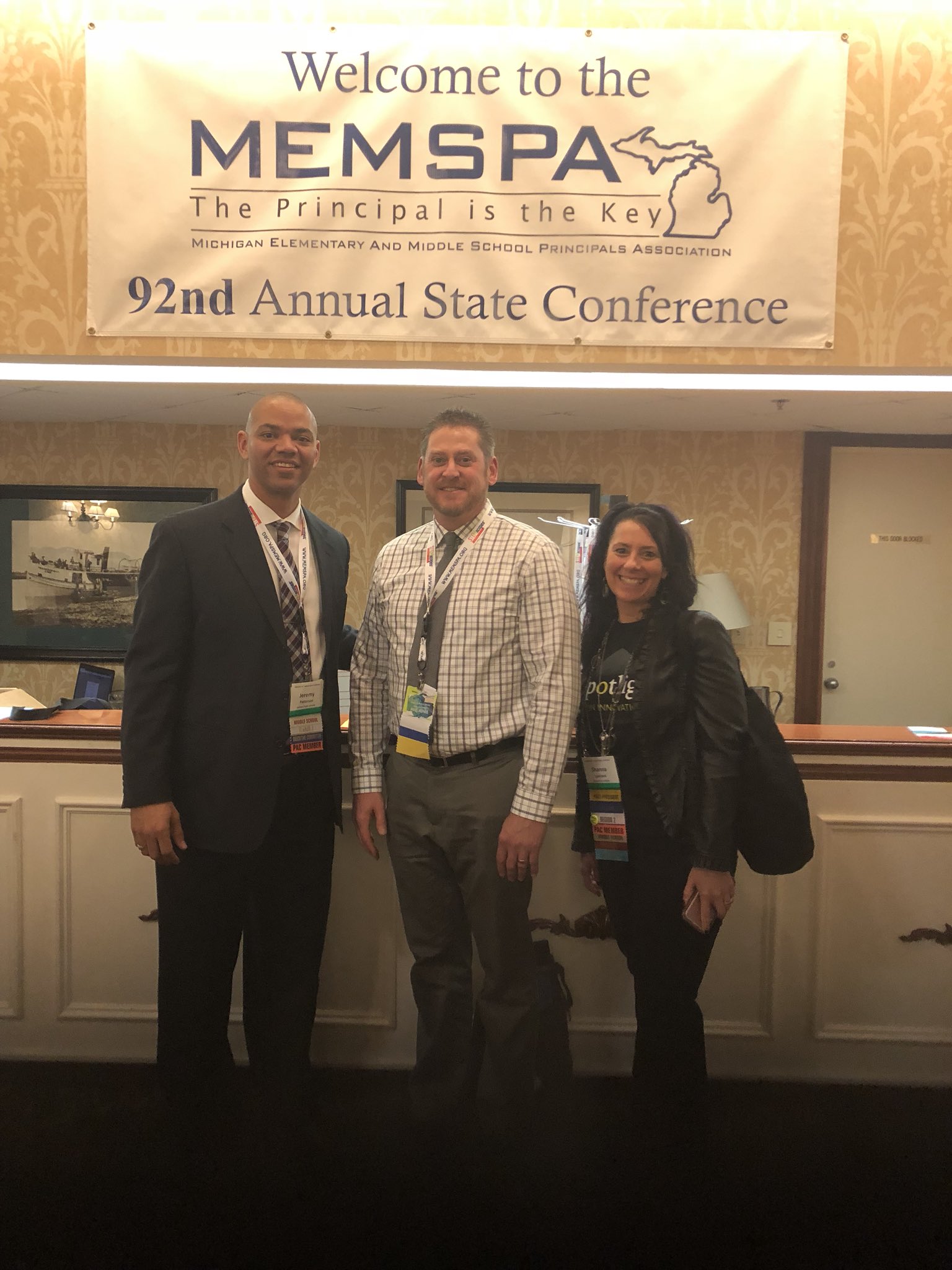
MEMSPA's 92nd Annual Conference
The MEMSPA Annual Conference is one of my favorite professional learning experiences! I am grateful to have the opportunity to serve on the board and attend this event. I always look forward to seeing colleagues, making new connections, and this year officially taking on a mentoring role. This year's theme was the Whole Leader, and MEMSPA delivered on this with all of the PD offerings.


For the first time, @donistamour created #MEMESPAconnects, a mentoring program for new principals in the association. It is exciting to be matched up with new principals and offer support. I am looking forward to the opportunity to give back, for it was my MEMSPA connections that helped me stay in administration, still loving it in my 12th year. The first morning of the conference, I got to meet one of my mentees and recruited another. I am looking forward to our book chats, monthly check-ins, and offering any support and guidance needed. Most importantly, to remind them that you should never stop learning and connecting with others.
Media preview
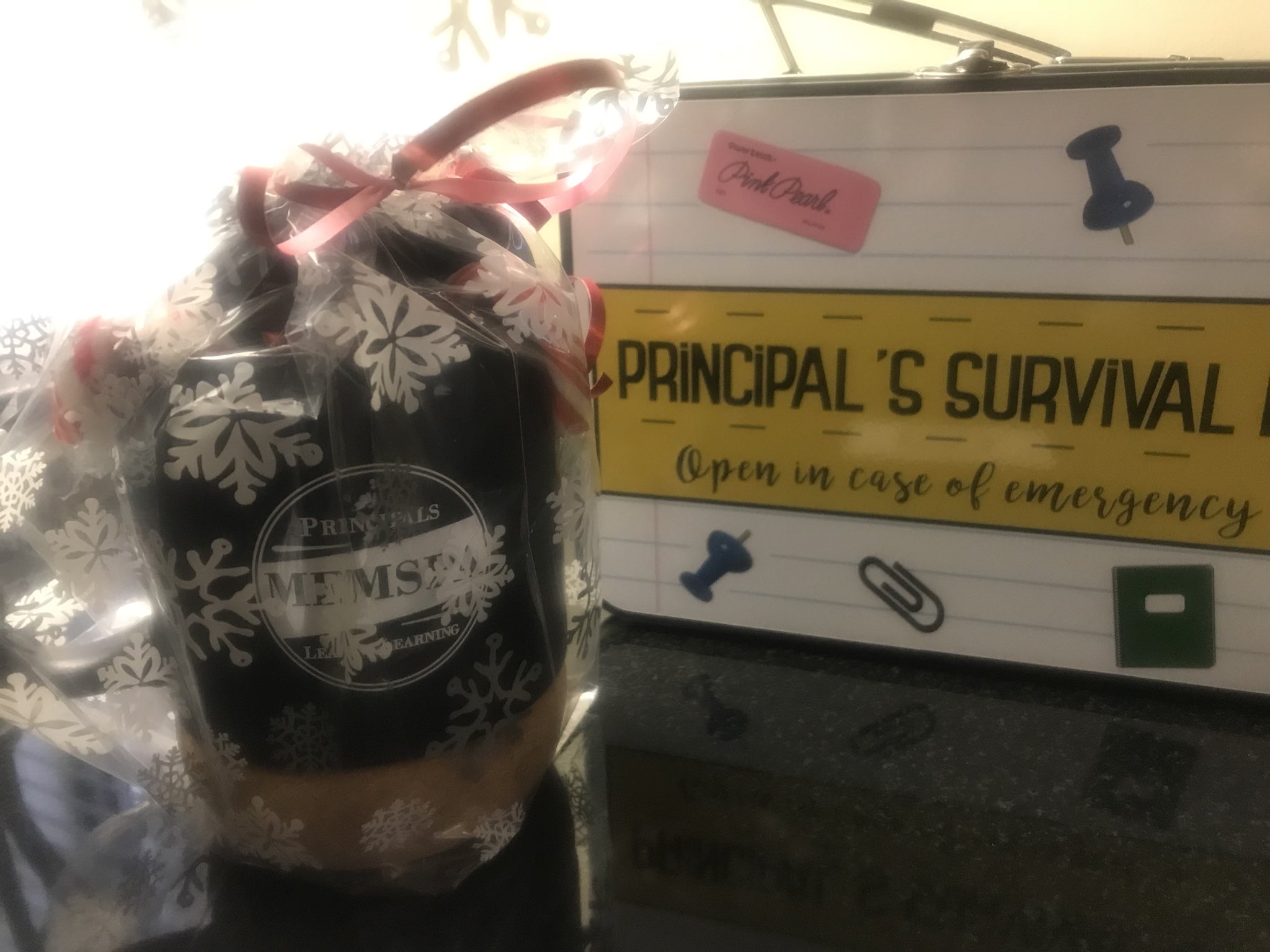
Mentee MEMSPA Swag (Scholastic)

The learning from the first session with Dr. Constantino was powerful. We need to create cultures in our buildings that believe family engagement is good. This means evolving from events to actual daily engagement. I look forward to continuing this discussion and cultivating innovative means to foster such engagement. Concurrent sessions supported this culture with collaboration initiatives with staff and ways to build and maintain relationships.

The second day at the President's breakfast, the general keynote speaker, Jan McInnis, presented on the importance of laughter! Many benefits to using laughter exist. Besides the health and relationship benefits, she spoke on the importance of using laughter to get through difficult times. This is such an important lesson--and a necessity to get through a career in education. We, especially as leaders, cannot take ourselves too seriously.


Media preview
Gilpin and Butler's Session
I went to several breakout sessions, learning about relationships, technology, RTI, and more, but the session that resonated with me the most was with @benjamingilpin and @danpbutler on cultivating relationships. It is so important to build up our teacher leaders. Ben and @Jon_Wennstrom (in another session) both echoed the importance of relationships and relationship building. Having specific ideas and approaches are always helpful, and these two sessions were full of proven approaches.
  
In the last general session with motivational speaker, Jim Mahoney, we were reminded, "You get what you give." Other meaningful advice included: "You can't teach the whole child unless you are the whole teacher/leader." "Feedback is the breakfast of champions." Culture trumps strategy, every time, and we can always do more and better with collaboration.
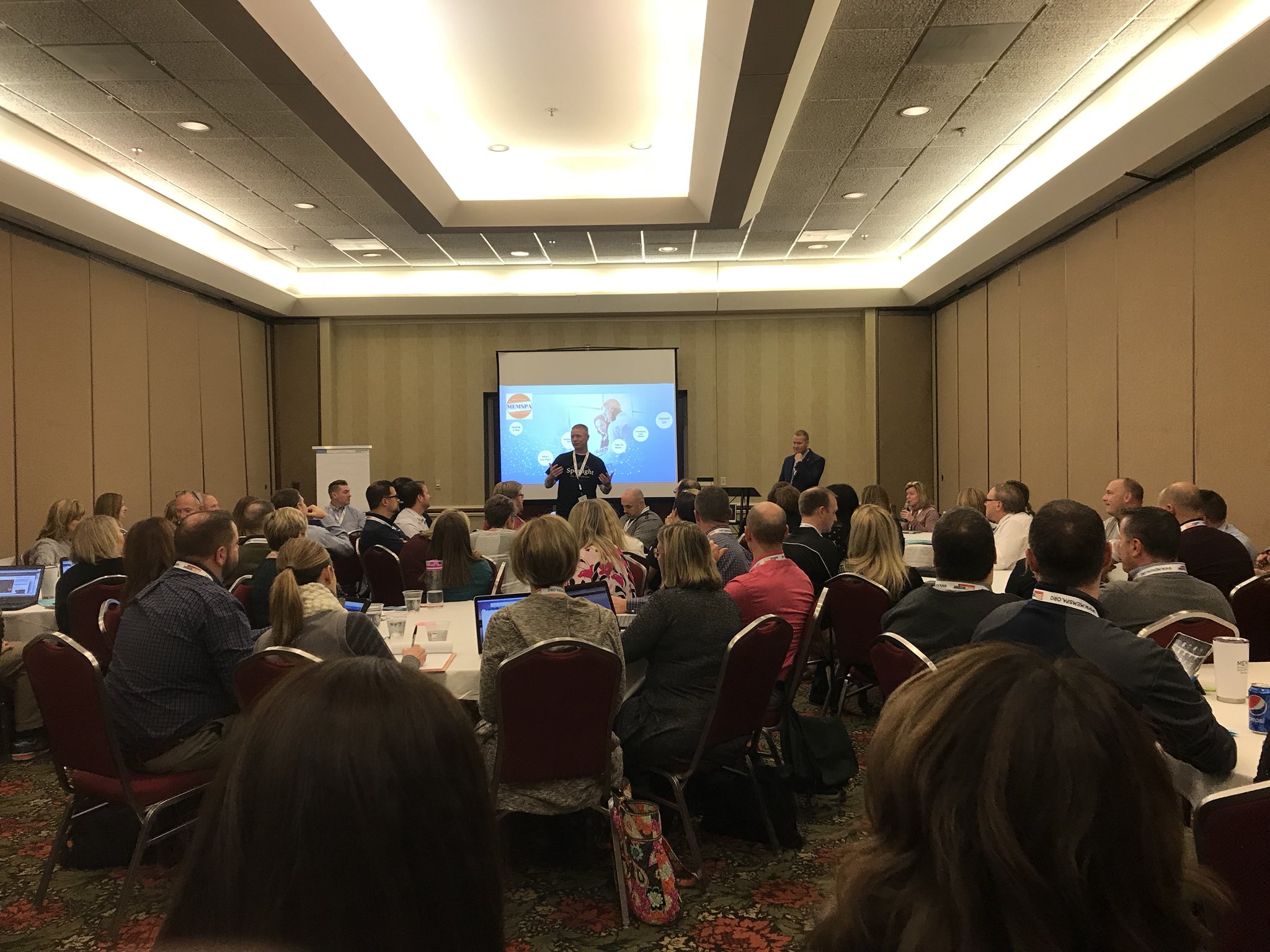
Job-Embedded Session

In addition to all of the great sessions, I was able to support the first Spotlight on Innovation and colleagues who have become great friends over the years. I also was able to present on the topic of job-embedded practices that my own teachers have made successful with both coaching and instructional rounds and our #ReadingMatters campaign and initiatives with my students from our Pages with the Principal The One and Only Ivan booktalk. The best part of the entire conference was recognizing outstanding region principals and seeing a well-deserving and long-time MEMSPA colleague and friend named MEMSPA's Outstanding Practicing Principal of the Year. Congrats to Craig McCalla; you are so very deserving! 


Media preview      Media preview
Colleagues, President Patterson and Past-President DeGraff (left) and Region 2 Principals (right)

Thursday, June 29, 2017

Educating for a Better Tomorrow

As I read the book, Innovator's Mindset, for the second time, I reflect on the introduction and try to answer the question, "What is the purpose of education?" as well as explain why innovation is so important to education. This quest makes me think back to Simon Sinek's Ted Talk and "Start with the Why" approach. (shortened video link)

Why do we educate youth? Why do teachers, leaders, and other educators dedicate so much of their time to the profession of educating students? While many people internalize their own reasoning, I believe the BIGGEST "why" we have centers around the desire to inspire and have an impact on creating a better tomorrow. This is usually articulated in the phrase, "to make a difference" by many educators and leaders.

At the moment, it is more challenging and demanding than it has ever been to make education relevant and engaging by personalizing learning and creating authentic learning experiences. Traditional practices and teaching to the middle no longer prepare students with what they need to know for what they need to do and become.

To create a better tomorrow, we need to connect with students, teach to the whole child, and instill the drive and courage to take risks to become the best versions ourselves (both educators and students). The need exists to continue to evolve our communities, countries, and world to be better for the next generation.

While this is a more challenging time in education and extremely demanding on educators, we have more tools, practices, access and reach to create engaging, meaningful, and personalized experiences for our students. Shifting our practices to offer more student choice and direction is helping to foster not only the knowledge required but also developing the skills demanded for tomorrow's world.

This brings us to why innovation is so crucial--to Simon Sinek's "How" circle. Innovation is creating change that transforms education, learning, and outcomes. We can only expect our students to be as innovative and creative and passionate about education as their teachers are. Furthermore, we can only expect our educators to be as innovative, creative, and passionate about teaching and learning as their leaders are.

In doing this, we need to be more thoughtful about restricting technology and come up with ways to teach appropriate use, make teaching and learning more efficient and personal, as well as prepare students for a world that doesn't even exist--a better world. We need to practice and model the skills we are asking students to develop. We need to take risks, learning from each other and our students. It will be a collective and collaborative approach to educate for a better tomorrow. 

Wednesday, May 3, 2017

Positive Approaches to the Networked Principal

In the middle of my second year of administration, my husband was deployed to Afghanistan. I was left with two young children, working on a specialist degree in education leadership, continuing a fairly new principalship, and the honeymoon was over. I had my first grievance; I was wearing many district hats in addition to leading a building. Although I tried not to show it, I really didn’t think I would make it. To be perfectly honest, I probably would not have made it through that year or the nine other years of serving and leading others if it were not for my strong network of colleagues through my professional associations of Michigan Elementary and Middle School Principals Association (MEMSPA) and National Association of Elementary School Principals (NAESP).

The principalship no longer needs to be a lonely, isolated island. With several opportunities to connect, engage, and contribute, the role of instructional leader can be more rewarding than ever before. No matter the location, level, or culture, similar people and resources are only a click away. It is essential to the vitality of the career to keep a close network of people to support, encourage, mentor, and challenge.  Staying connected means participating in professional associations and organizations, using social media, and committing to giving back to the profession. These are just a few ways to stay both connected and positive.  

Professional Organizations
Many state and national organizations and associations make it easy for people to connect. Conferences and workshops add in time to collaborate, network, and connect with other professionals. Many offer professional learning offerings that are sustained over time with opportunities to collaborate.  Many groups and regional subgroups have face-to-face and virtual meetings, making it even easier to connect with other principals. It is important that leaders utilize these supports and connect with others in the profession. Participation can keep members positive in times of difficulty. Taking an active part in NAESP or other professional associations is a BONUS to its membership.

NAESP is a BONUS to you!
B
Bucket Filler: Participating in regional, state, and national activities and networking can fill your bucket emotionally, educationally, and professionally.
O
Opportunity to give back: Get involved. Share your knowledge and skills. Mentor your teacher leaders; assist aspiring, new, and veteran leaders.
N
Networking: Make connections and use them to help support, assist, and encourage you. Connections can help you build your own capacity.
U
Understanding/Learning: The professional learning that these organizations provide is outstanding: up-to-date legislative updates, news, and PLNs.
S
Support: The membership comes with many additional supports and perks: legal advice, liability insurance, PD, expert colleagues, and many resources.

In addition to the membership benefits of an organization, social media can break down barriers to connecting with others in the profession. A networked, 21st-Century leader is using these outlets and tools.

Social Media
Many professional memberships, such as MEMSPA, are using social media to further the reach and support to principals. #MEMSPA chat Thursday nights at 8:00 p.m EST is a great way to collaborate with other principals on important, timely, and relevant topics. Following hashtags of these key organizations opens up resources, information, and professional learning. Applications like Voxer, Blogger, and Twitter can extend a leader’s reach and support. Social media is great for school and district branding; moreover, it serves as a well for leaders and educators to connect, dialogue, reflect, communicate, collaborate, be creative and think critically. These 21st-Century skills are not just for the students. All stakeholder groups need to practice, model, and develop these skills. However, it does not just stop there. Networking is a start. Mentoring, sharing, and supporting are a ways to give back to the profession.

Pay It Forward
It is critical to the success of education to share the knowledge gained from participating in networked, collaborative ways to others in the profession. Not only will leaders become more reflective in their own practices, but they can also support others at the same time. Growing from participating in a Twitter chat to moderating one is a start. Taking risks and blogging about successes (even after failure) can both inspire and encourage other leaders. Presenting at conferences, joining leadership positions at regional, state, and national levels, mentoring aspiring and new leaders, and even writing articles in leadership publications is a way to contribute.

 #LeadPositive
The most important aspect of a networked principal is to be positive and lead by example. Students, teachers and staff, parents, and the community need to hear and see all of the good school leaders and educators are doing. The quote, “If you change the way you look at things, the things you look at change." by Dr Wayne Dyer is evidence that a person’s outlook can make or break his or her day and the climate of the buildings. If principals lead with more positivity, their teachers and students will be more positive. It is contagious. It needs to be the networked principal’s mission to lead positively. Negativity can only be stopped with strong positive connections, behaviors, and attitudes. It is the duty of an instructional leader to be contagious with positivity.

Being an instructional leader can be an exhausting career; however, for a networked principal, it may be challenging and difficult, but it is the best, most rewarding profession there is. #LeadPositive

Web Resources:

George Couros is an amazing speaker, blogger, and author. In this Principal of Change: Stories of Leading and Learning blog, he writes the post “Social Media for Administrators.” This is a great place to get started.

“Millennials Have Rediscovered the Benefits of Joining a Professional Organization”

Mentoring is beneficial to all.

Positivity Can Be Contagiously Rewarding: Negativity, Destroying blog with a positive, education focus.


Positive Brand Advocates for Education

As instructional leaders, principals, teachers, and school employees, we must be positive, "net promoters" of our schools and professional organizations. Public education has been the dumping ground for far too many people. As professionals, it is our duty to deflect detractors and negativity being said. People are quick to be critical of education, our schools, and our professional organizations. It is our duty as ambassadors to our students and advocates for our schools to bring to light all the amazing practices that are taking place in our schools.

We are in the business of human beings, and for most of us, these are our little human beings. In addition to teaching them content, standards, and skills needed in the modern world, we are also modeling and teaching them how to be good, empathic, contributing citizens. Furthermore, we are dealing with more trauma, mental health, and social/emotional well-being than ever before. This is no easy task, but as professionals, we face and accept this challenge. Educators work unflaggingly to accomplish these important tasks by combining and intertwining content standards and expectations, individualizing and creating authentic, relevant, and meaningful experiences. On top of this, we are working to learn about and understand each child while providing care, understanding, challenge, and holding them to high expectations. Educators wear more hats and love more people in a day than most people do in an entire year.

We cannot allow people to continue to pass judgement and taint the climate and culture of education. We all need to work to be a part of the solution and not add to the problem. Are there ineffective teachers and leaders? Just as there are incompetent professionals and parents, it is the same for people working in the field of education. We don't categorize all doctors or parents as unqualified because of a few. The majority of educators does not fall into the classification of ineffective. We want to grow, develop, better ourselves and our students. What does this all mean?

We have to STOP being negative about our schools, our teachers, our leaders. We need to build bridges, not walls and support one another. We need to not give others permission to speak badly about education by adding to the negative dialogue. We need to cheer  out for our students, our staff, our teachers, and our districts. We need to bombard meetings, social media, inboxes with all of the amazing teaching and learning that is happening. We need to promote the amazing, collaborative professional learning we are experiencing and how we are applying it in our districts. Being a neutral or passive promoter is no longer enough to combat the negativity.

Speak up; share. Be an upstander for education, our professional organizations, our schools, and our teachers. Yell it, tweet it, snap it, post it. A great deal of love, care, innovation, and dedication is present in education. People are only going to know what they see and hear. What type of message are you sharing?

Monday, October 10, 2016

8 Positive Approaches for Both Child and Adult Learners

Learner-centered approaches are important to making learning meaningful, engaging, and personal.

Whether a teacher, leader, or student, learning needs to involve several approaches. For me professionally, the learning that I have been involved in has been more valuable when these 8 approaches are used.

With Twitter, MEMSPA (Michigan Elementary and Middle School Principals Association), my professional association, and now the #IMMOC, I have been exposed to several of approaches Couros recommends.

Voice: EdCamps, Twitter Chats, and interactive sessions have given me the opportunity to use and have voice. I can learn from others and share that learning. While this is a responsibility of the participant and I am more willing than many to share, a good facilitator will give all participants a chance to express, connect, and voice his/her learning.

Choice-Based PD and Learning: Having choice both personalizes and gives participants the chance to develop skills that are needed. I can search these out on Twitter and join chats to help me develop my areas of weakness. I also attend sessions at conferences that will fit my needs.

Reflection: Not only personal reflection is important, but reflective dialogue with others will have more of an impact on creating the change we seek. The  #IMMOOC has been some of the best PD to allow this. Reading other blogs and comments on my own is a constant cycle of reflecting, learning, connecting, and analysis. Twitter chats and many sessions that I have been to have now built this in. I love when there's an accountability piece (to myself and others).

Innovation: I tend to pick sessions that will enhance my knowledge and push innovation. #IMMOOC has been both a challenge and fun. Blogging out of my normal scope, sharing and reflecting out to a community, and most importantly being exposed to so much innovation and creativity of the #IMMOOC and #InnovatorsMindset community. MEMSPA has also worked to create learning beyond the traditional approaches. I love Thursday night #MEMSPAchats!

Critical Thinking/Problem Solving:This is one where my graduate classes at #EMU have been top notch. Inquiry-based and problem-based projects that extend over a course of learning with personal connections can be very rewarding. This is more difficult in shorter stints, but it can be done. I would like to see more challenges given to us adult learners that would force us to both collaborate and combine resources.#IMMOOC has done this by asking up to do both new types of reflections and getting involved in other participants learning.

Self-Assessment: This is lacking too unless we force ourselves to do it and do it often. I was fortunate that this was a part of my coursework and continues to be embedded in my professional evaluation. I used self-reflection and also reflect on 360 data which includes perception data of all stakeholders.

Connected Learning: MEMSPA, Twitter, #IMMOOC have all been connected learning. I am learning beyond my building, my district, and my state. I have been in touch with experts like +George Couros, @bengilpin,  @MrDomagalski, @Toddwhitaker, and many, many others.  We need to do the same for our students.

Bottom Line: You get out of learning what you put into it. Helping our students have more intrinsic desire to get more will be boosted when we use more learner-centered approaches like the "8 Look Fors" by Couros.

Sunday, October 2, 2016

Learning 2.0: Establishing Positive Leaning Environments

Chapter 6 in The Innovators Mindset does use "traditional school"
(Couros, 2015, pg. 101)
While I would suggest this graphic read "Traditional School" and "Effective Learning," it is right on par with the shift we are making in both teaching and learning at Milan Middle School. Teaching and learning are on an instructional practices continuum that ranges from teacher-centered to student-centered. I would say that "school" has variations on that continuum and is not just one or the other. With the shifts in Common Core, 21st Century Skills, and Project/Inquiry-Based Learning, the first column in this  graphic doesn't give all of these shifts and the work educators are putting into their practice enough credit. 


We need to shift our practices to engage our youth. Some of the best ways to do that are through student-centered approaches that allow students to drive their learning, demonstrate their understanding, and help them prove mastery of content in meaningful ways to the the student. This type of instruction is active for the students; it has a feedback loop; and it involves collaborating with peers and the teacher (as facilitator). 

Student-Centered Instructional Practice: “beliefs, actions, processes, philosophies, ways of doing things, and ways of making sense of the purpose of education based on the belief that the outcome defining successful teaching is what the student learned. Subsets within the learner-centered instructional paradigm include such practices as collaborative learning and active learning” (King, 2000, p. 8).  

The "Learning" column in the first graphic is describing that student-centered instructional approach. Through my dissertation, many of Hubba and Freed's (2000) descriptors were supported as having an impact on changing teacher practice to be more student-centered. These included student feedback, treating students as sophisticated knowers, making learning intrapersonal and active, using the teacher as a coach or facilitator of learning, helping student understand what quality work is, making sure students understand application of that work, incorporating teaching and assessing, and using both general and subject-based skills. 


Created by Jaclyn Stevens
At MMS, teachers use "I can" statements, but many also make the objective the essential question. Even students create questions to answer. Students are not limited by exemplars; they can advocate ways to demonstrate their mastery of content. Using student interest is key to connecting learning. Many teachers use learning management systems, such as Schoology or Google Classroom and some are now even blending the learning, so learning can happen anywhere, any time, and at any pace. The learning is collaborative. The teachers take risks and demonstrate to students that they are learners too. We are using the SAMR model to help us and our students dig deeper into their understanding.  These are just a few shifts that we are making at MMS to establish a positive learning environment. A major building goal this year is to transform our practices. I am fortunate enough to have a great, risk-taking, innovative staff who truly wants what's best for our kids. #PowerUpMMS

Tuesday, July 26, 2016

Next Gen Teaching: A Quick Guide to the New School Year

Both the classroom and the instruction need to change to better engage and challenge our youth.

1) Take Risks: Model and demonstrate learning from failure, taking risks, and discovering the end verses starting with the end in mind. Check out Diana Laufenberg's "How to Learn? From Mistakes" Ted Talk where she explores experiential learning, student voice, and embracing failure. Read Dweck's Mindset book to understand a shift in mindset. We must be open to extending the learning beyond the classroom walls. We must teach our students to embrace challenges and to learn from failure. Start by modeling it.

2) Facilitate: Be more than the sage on the stage. Become a director of learning. Shift your practices to student-centered approaches. Check out this chart comparing teacher versus learner-centered practices. Largely based on Huba and Freed (2000), the following descriptors factored into the student-centered instructional practices variable in my dissertation study (Spickard, 2015):

  • Students are able to apply the learning.
  • Students receive feedback (preferably from multiple parties).
  • Students become sophisticated knowers.
  • Learning is interpersonal for the students. 
  • Students are actively involved in their learning.
  • Teachers also demonstrate that they are learners.
  • Teachers coach students.
  • Students understand characteristics of excellent work.
  • Students integrate both general and subject-based skills.
  • Teachers intertwine teaching and assessing. 

3) Create a Collaboratory: Shifting your classroom design is key to fostering the 4Cs: Creativity, Collaboration, Communication, and Critical Thinking. Check out this slide share for some ideas. A coffee shop/living room feel is a better alternative to the traditional rows. Traditional spaces will only lend itself to traditional practices. Here are some creative DYI projects for redesigning on a budget.

4) Ignite Passion: Students can only be as passionate and excited about teaching and learning as their teacher. Check out Christopher Emdin's Ted Talk on "Teach Teachers How to Create Magic." Student choice will help bring out the passion and "spark magic."

It's time. Now is the future. There is no more waiting. We need to take risks, facilitate learning, build a collaborative environment, and create passion.

Tuesday, May 31, 2016

My First, Tenth Year: Opportunites to Grow


I am excited that this year has been one of the most rewarding years of my career so far. I have had several opportunities to grow professionally. It has been far from easy, but I have had the opportunity to work with a fantastic group of dedicated and talented teachers. In addition, I have completed my year as MEMSPA President and have benefited tremendously from the support, professional learning, and networking the organization has given me. Lastly, I have made my way back into the classroom, teaching graduate classes in educational leadership with Concordia University.

There are years that I find it hard to believe that principals are leaving the profession after 3-5 years, and to be perfectly honest, I have had a year or two where I wondered if I were going to make it. In my entire ten years as a middle school principal, I have learned that is mostly outside influences that make it the most difficult. For me, it has never been about the students and rarely about upset parents or staff. The most difficult years have been when legislature makes decisions that project hardships on stakeholders. Those effects were even more difficult than leading a building through my husband's deployment. Negativity can really affect the morale and building climate. 

However, "mind over matter," "...make lemonade," and most importantly, "#leadpositive" got me through even the most difficult of times. Taking a positive mindset and combining that with the personal passion to grow and help others do the same combats adversity.

Starting a new year or a first year especially, is never easy. Learning about all the stakeholders takes more than a year. An education profession is never ending, but it is even more difficult when you are learning a new culture, establishing climate, and figuring out your own identity within the organization. Building trust is vital and takes time. Fostering collaboration is essential to growing as professionals. Most importantly, establishing ways to build achievement and growth within your staff and students as well as yourself takes a collective mix of perspective, honesty, and open-mindedness.

I have learned a great deal from my new position and district. While bringing in my own skillset, I have also learned a great deal from my staff. This has been my first year with standard-based grading and PBIS--two initiatives that have such a tremendous influence on educating students. I have been a part of team collaboration. It is so amazing what groups of teachers can do together, and everyone benefits from that work. My administrative colleagues have been supportive, provided coaching, and made me feel a part of this amazing team that is founded on tradition and focused on excellent. To top it all off, the students are at the heart. The smiling faces, the willingness to learn from mistakes, the innovative, caring application put into their education is truly the fuel to my passion. Serving my new school has been rewarding, and I am fortunate enough to have that compounded with serving my professional organization.

My loyalty to and admiration for MEMSPA started ten years ago when I took on my first principalship. Four years ago, getting involved at the state level confirmed all that the association has to offer. This has been a great year, spreading the #LeadPositive message and encouraging principals to not only stay and lead positive but to also share the positive word, happenings, and accomplishments within their buildings. Serving and representing principals around the state has been a truly rewarding experience. MEMSPA is a huge support to me and my profession. It has been equally rewarding by stepping back into the classroom.

I have broadened my skillset as well as gained an increased appreciation for teaching in the present times. Doing both an online and face-to-face class this year has diversified my pedagogy. In addition, I am driven to stay current on the topics of my classes: leadership, professional development, evaluation, and supervision.

I have been truly blessed this year with all of the opportunities I have had and the people with which I have had the pleasure to meet and work. None of this would be possible if it weren't for my supportive and encouraging husband and understanding children. The 2015-16 school year has been a rewarding year. I can't wait to see what 2016-17 has in store! 

Tuesday, December 8, 2015

MEMSPA Conference 2015 Takeaways


Conference leadership, networking, learning, and fun! 
The 90th MEMSPA (2015) Annual Conference was a huge success: learning enhanced and relationships and networking expanded. 

The conference was opened with my welcome and reminder to be grateful and #LeadPositive. In addition, suggestions were made to help participants to maximize their conference experience: Grow Your Network; Get Smarter. Repeat.; Curate and Create Content; Share the Smarts: Knowledge Transfer With Your Team; and Optimize the Value (Lee Odden: online marketing blog).
Our first general session keynote, Dr. John Draper, spoke about America's schools and reminded us that "Teachers are the solution to the problem," and "Miracles happen every day in public schools." Draper was inspiring and passionate about our work in public education.

The afternoon general session with State Superintendent Whiston demonstrated his openness, support, and collaboration with Michigan Schools and stakeholders. Whiston reminds us that our voice needs to be heard. Our executive director Paul Liabenow, was supported through a surprise flash mob to "We are Family." Principals from around the state learned the routine to honor him and all of his advocacy for us, our schools, and our students. My day ended with visiting with new principals to the association at dinner and greeting conference attendees.

Thursday was the best day: full of great speakers, breakout sessions, time to network, recognize leaders, do official association business, and end with some social time to unwind. Keynote speaker, George Couros, reminds us to be innovative and help children find their passion. We learned that it is more than making better students; it's making better people. Other great sessions that I attended included "Connected Pedagogy" and Twitter for Professional Learning. I lead the delegate assembly, met with vendors, spoke to retirees and past presidents of the association, and socialized with the membership. My favorite part of the night was recognizing our regional principals of the year and our Michigan Outstanding Practicing Principal at the Leadership Banquet. I am always inspired by these fantastic leaders. Congratulations Michigan's 2015 Outstanding Practicing Principal, Nicole Airgood.

Friday, we ended our day with Dr. Nancy Coleflesh who proves to us that we can make a difference even in the most difficult of times. I value this time with my colleagues. I hope, if you attended, you did too. Keep networking, use your connections and resources, and don't forget to continue your learning on #MEMSPAchat, Thursdays at 8:00 p.m. It's been a great year!

Remember: #LeadPositive, have gratitude, share the wonderful happenings, be innovative, let students loose, learn and grow, share with your colleagues, and repeat. Have a great holiday season and a fantastic New Year!

Serving you,
Shanna

Saturday, July 4, 2015

MEMSPA: Lead Positive and Use the Membership

Snip20150703_10.png
Lead Positive!


This month I undertake the role of Michigan Elementary and Middle School Principals Association President. I am so honored to be serving principals in the state of Michigan. MEMSPA has been a huge support to me over the past nine years. The connections, networking, professional learning, and opportunities have been extremely beneficial to me both personally and professionally. My goal in this year of both leadership and service is to remind you throughout the year to focus on positivity. As the leader of our buildings, students, and staff, we must bring back validation to the profession, teaching, and education. We can do that by being positive ambassadors for education. This year, I will use the theme "Lead Positive" as a reminder to be positive and model positivity.

The quote, “If you change the way you look at things, the things you look at change." by Dr Wayne Dyer is evidence that our outlook can make or break our day and the climate of our building. I will add to this. If we lead with more positivity, our teachers and students will be more positive. It is contagious. This year, I encourage you all to try to find a means to stay positive. Many benefits exist for people who are positive thinkers. Mayo Clinic reports that benefits include increased life span, lower rates of depression, greater resistance to illness, and better coping skills during hardships and times of stress. Use something or someone to help remind you to stay positive; you might use a piece of jewelry as a reminder, daily meditation, a secretary to keep you on track, or even a rubber band to help stop negative thoughts or comments and to try and change that negative thought, feeling, or comment into a more positive outlook. Smile more, have fun, laugh, and connect with staff and students. In addition to being positive this year, use the resources MEMSPA offers.

Use the value of your MEMSPA membership and connections to assist you in having a successful year. The MEMSPA membership is such a "BONUS" to us. Please use it.

Don't underestimate the people you will meet at MEMSPA events. I have learned a great deal from all my MEMSPA colleagues. I am so grateful to principals who give back to the profession and others. While countless principals give back, I would like to give special appreciation and validation to several individuals who have given back to MEMSPA and the profession.

Mike Domagalski: Thank you for initiating and leading MEMSPAchat! I have enjoyed sharing and learning with colleague not only around the state but also across the country.

Ben Gilpin: Thank you for all your sharing about school branding and technology integration at the regional, state, and national levels.

Jonathon Wennstrom: Thank you for your blogging and providing insights on taking risks in leadership.

You do not need to be on the Board to give back. Get involved and help be a part of the solution.

I look forward to serving you all this year. We have been working to put together a great summer institute. It is not too late to bring an administrative team to learn, network, do some strategic planning, and rejuvenate before the students are back. We also have a great line up for the state conference this December in Kalamazoo. Take time to read your MEMSPA news and updates. Follow @MEMSPA on Twitter or do a #MEMSPAchat, and get involved. I guarantee you that you will only grow and benefit more from it.

Lead Positive,

Shanna