Showing posts with label collaboration. Show all posts

Saturday, September 5, 2020

#UnitedWeLead: Principals on a Mission


This past June a team of MEMSPA board members collaborated and became solution seekers and fighter starters to ignite not only a purpose but also create a movement to support our members, educators, and students of color. This group of leaders, even in the midst of COVID, worked to find ways to collect tinder and kindling to fuel a very important fire for the year. 

Through this brainstorming and planning, an event was ignited. Following all of the safety protocols and guidelines, principals came together to learn about ourselves, our biases, and how to lead and foster courageous conversations around race. Principals from around the state brought their own courage, vulnerabilities, and passions to join the mission to be and create change--to support each other and our school communities in extinguishing injustice and cultivating equity.

Through climate adversity of the cold rain and wind, hope was built on the words of our Black colleagues who inspired us through opening, mid-day, and closing remarks. We learned to get into the good and necessary trouble as Michael Johnson inspired us with John Lewis's words. We were awaken by the words of Detra Fields as she reminded us of all of the injustices that are still present to this day. Lastly, we were moved to be change agents by Jeremy Patterson as he demonstrated you can create waves with the smallest ripple.

Ripple was my word for the day, as we started out in small, masked, and socially-distanced groups/circles under tents around the MEMSPA property. I was hoping the day would create a ripple that would take leaders back to their buildings with confidence and tools to not forget about the important work we need to do even in the midst of COVID, virtual and remote learning, and other restrictions. This work cannot wait. 

The focus of the day was to provide experiences about self exploration and give a platform for having difficult, courageous, and honest conversations. We ended our day with commitments to continue this work. The heat from what we started that day is proof that #UnitedWeLead and #TogetherWeCan. 

Sunday, December 10, 2017

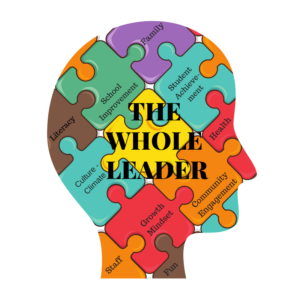
#MEMSPA17 Takeaways: Whole Leader Theme Delivered

Media preview
MEMSPA's 92nd Annual Conference
The MEMSPA Annual Conference is one of my favorite professional learning experiences! I am grateful to have the opportunity to serve on the board and attend this event. I always look forward to seeing colleagues, making new connections, and this year officially taking on a mentoring role. This year's theme was the Whole Leader, and MEMSPA delivered on this with all of the PD offerings.


For the first time, @donistamour created #MEMESPAconnects, a mentoring program for new principals in the association. It is exciting to be matched up with new principals and offer support. I am looking forward to the opportunity to give back, for it was my MEMSPA connections that helped me stay in administration, still loving it in my 12th year. The first morning of the conference, I got to meet one of my mentees and recruited another. I am looking forward to our book chats, monthly check-ins, and offering any support and guidance needed. Most importantly, to remind them that you should never stop learning and connecting with others.
Media preview
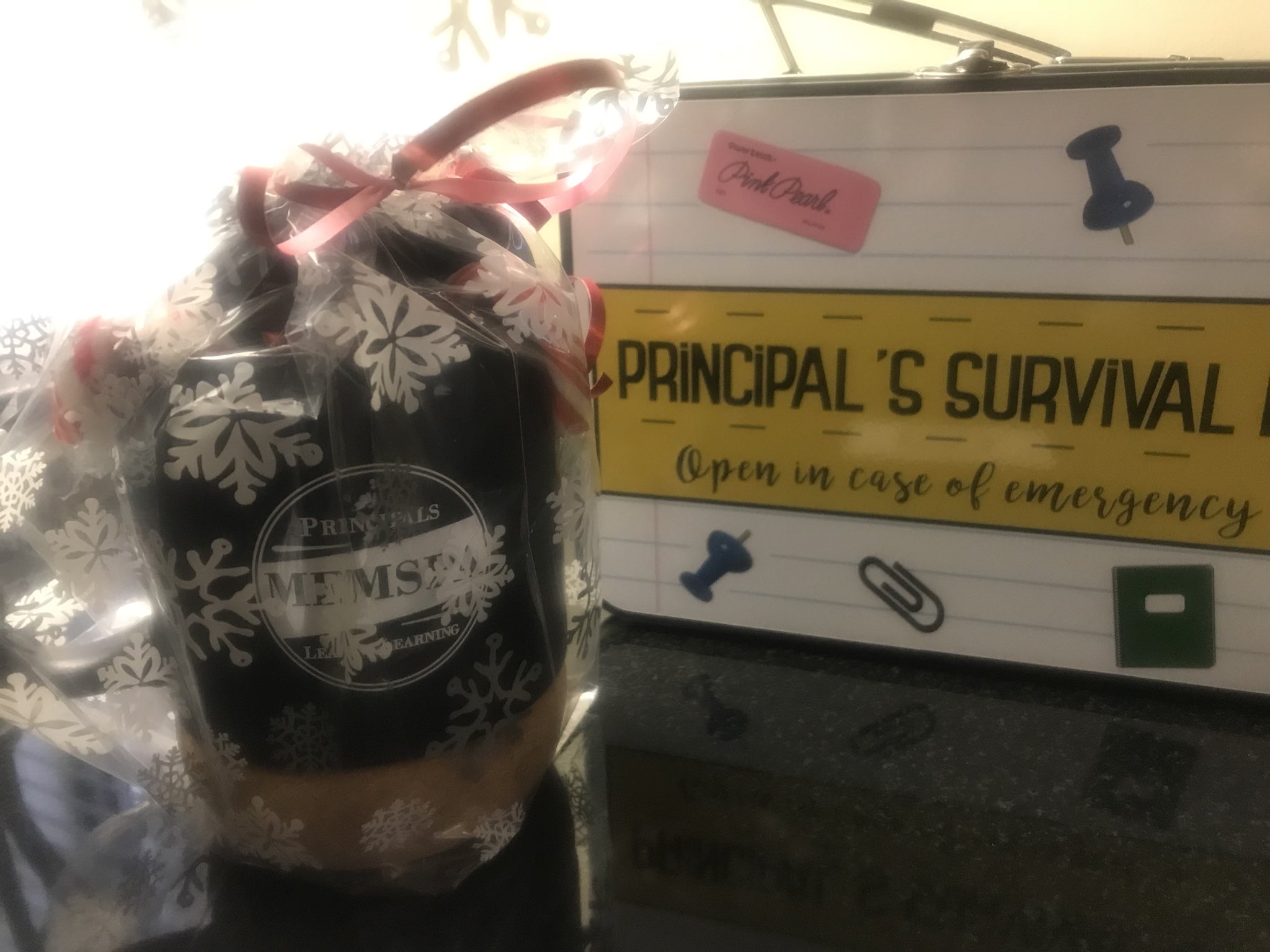
Mentee MEMSPA Swag (Scholastic)

The learning from the first session with Dr. Constantino was powerful. We need to create cultures in our buildings that believe family engagement is good. This means evolving from events to actual daily engagement. I look forward to continuing this discussion and cultivating innovative means to foster such engagement. Concurrent sessions supported this culture with collaboration initiatives with staff and ways to build and maintain relationships.

The second day at the President's breakfast, the general keynote speaker, Jan McInnis, presented on the importance of laughter! Many benefits to using laughter exist. Besides the health and relationship benefits, she spoke on the importance of using laughter to get through difficult times. This is such an important lesson--and a necessity to get through a career in education. We, especially as leaders, cannot take ourselves too seriously.


Media preview
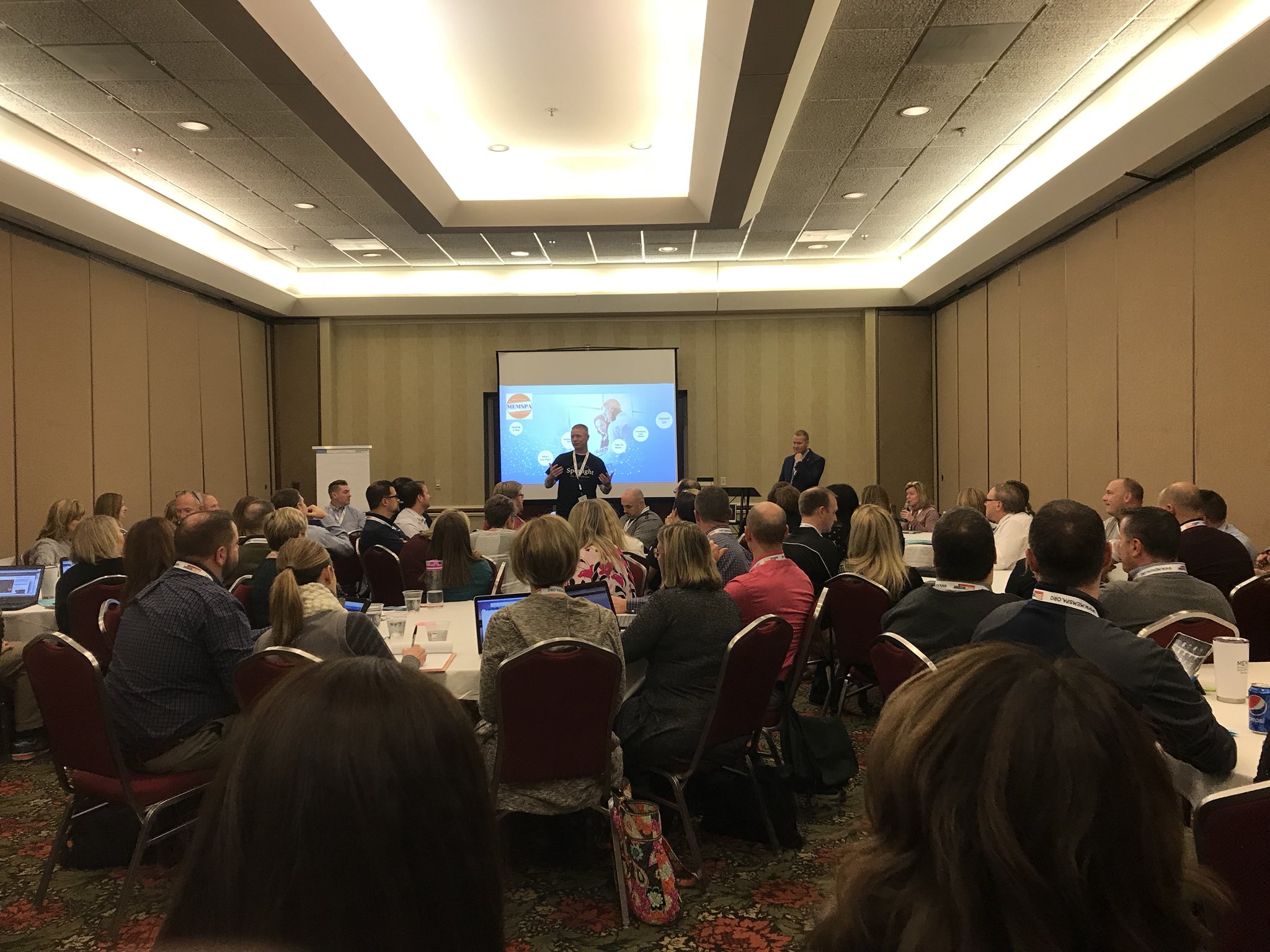
Gilpin and Butler's Session
I went to several breakout sessions, learning about relationships, technology, RTI, and more, but the session that resonated with me the most was with @benjamingilpin and @danpbutler on cultivating relationships. It is so important to build up our teacher leaders. Ben and @Jon_Wennstrom (in another session) both echoed the importance of relationships and relationship building. Having specific ideas and approaches are always helpful, and these two sessions were full of proven approaches.
  
In the last general session with motivational speaker, Jim Mahoney, we were reminded, "You get what you give." Other meaningful advice included: "You can't teach the whole child unless you are the whole teacher/leader." "Feedback is the breakfast of champions." Culture trumps strategy, every time, and we can always do more and better with collaboration.
Job-Embedded Session

In addition to all of the great sessions, I was able to support the first Spotlight on Innovation and colleagues who have become great friends over the years. I also was able to present on the topic of job-embedded practices that my own teachers have made successful with both coaching and instructional rounds and our #ReadingMatters campaign and initiatives with my students from our Pages with the Principal The One and Only Ivan booktalk. The best part of the entire conference was recognizing outstanding region principals and seeing a well-deserving and long-time MEMSPA colleague and friend named MEMSPA's Outstanding Practicing Principal of the Year. Congrats to Craig McCalla; you are so very deserving! 


Media preview      Media preview
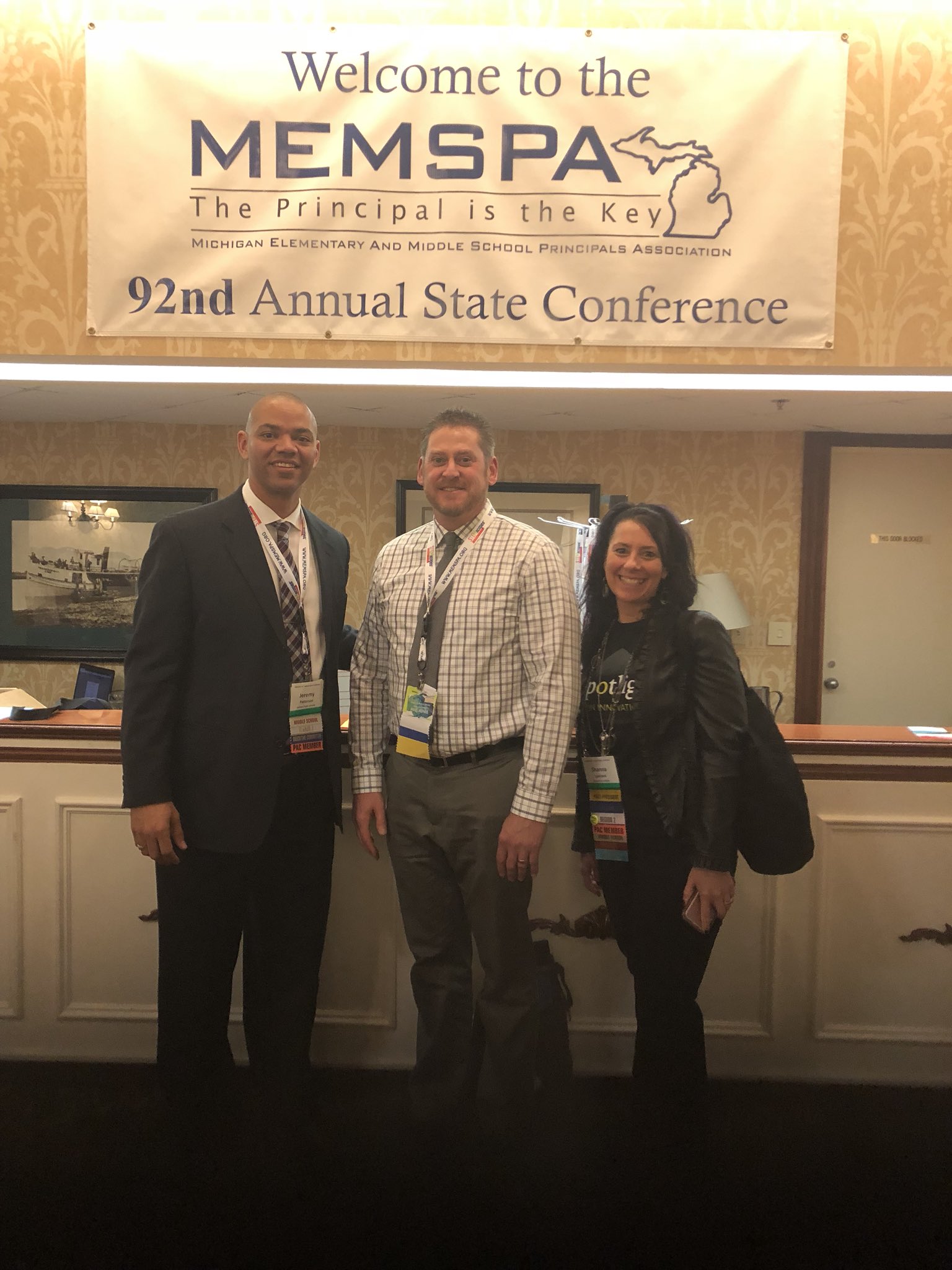
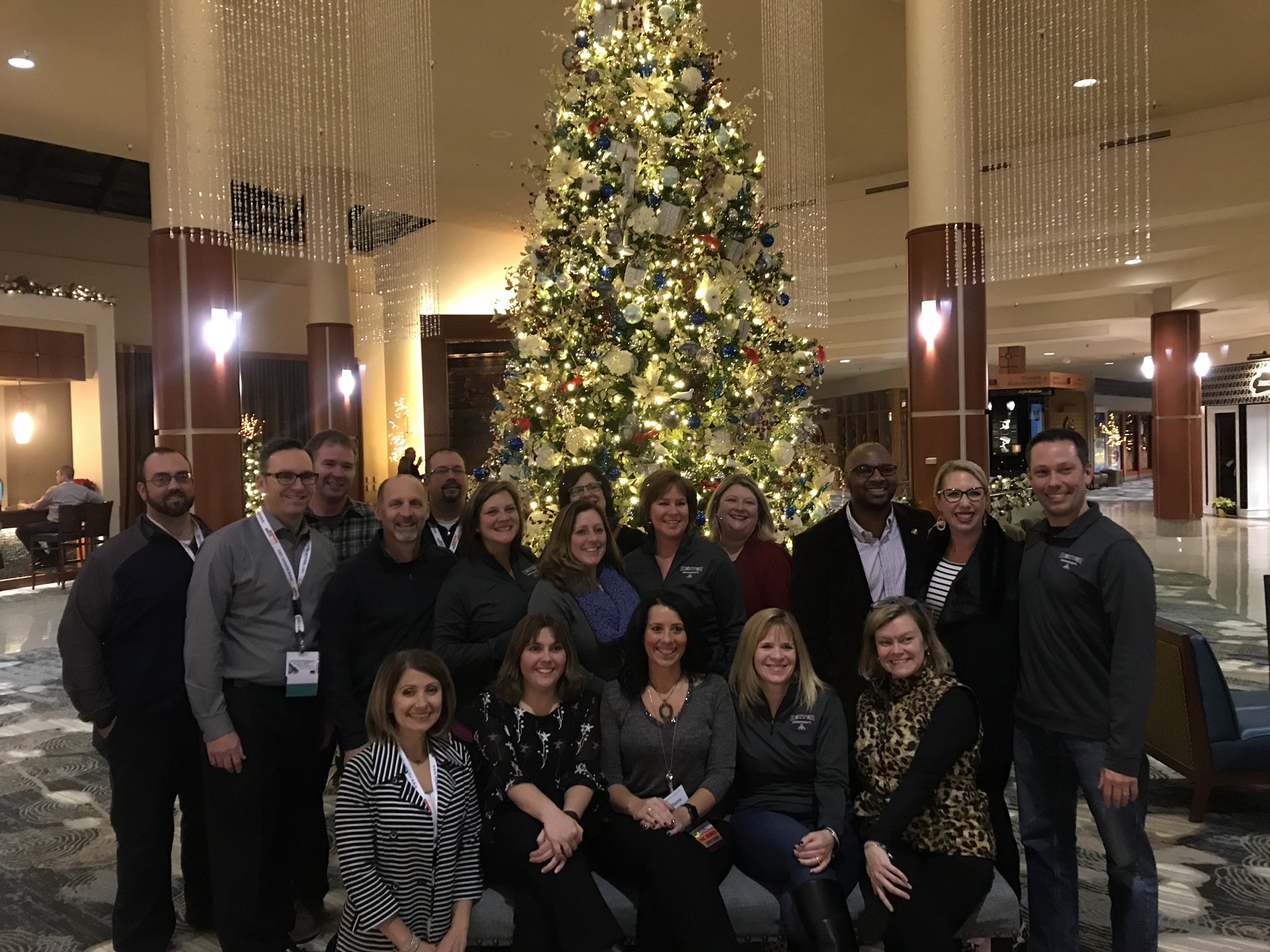
Colleagues, President Patterson and Past-President DeGraff (left) and Region 2 Principals (right)

Wednesday, July 5, 2017

Positive Changes in Learning with Innovative Practices: 5 Outcomes of Using an LMS

"A way of thinking that creates something new and better" is how George Couros (2015) defines innovation in his book and guide, The Innovator's Mindset. He conceptualizes this term in chapter one, explaining what innovation both is and is not.  Emphasizing that technology is only the tool and not the outcome, innovation involves transforming the learning environments and practices to make it newer and better.

An innovative practice that leads to a more personalized learning environment (newer and better for many) is the use of learning management systems (LMS). The type of LMS doesn't matter. Teachers may use Google classroom, Schoology, Edmodo, Moodle, Blackboard or a variety of others. It is this practice that helps to make both differentiation and personalization more efficient than ever.  Here are just a few ways an LMS can foster an innovative culture and environment.

1) Reading (at the students independent and instructional levels)
Teachers can group students and/or provide individual students themed-related reading texts at their reading levels. The LMS provides a confidential way to protect students reading texts several years below grade level.

2) Flipping lessons
Teachers can record their mini lessons and post them in the LMS for students to view, pause, and replay until they can better understand the instruction. If students do watch the videos as the "homework," the teacher is available to coach, assist, and facilitate the practice and doing part of the lesson in the classroom.

3) Linking Supplemental resources
Teachers can link resources that meet different multiple intelligences, so students can have the teaching that works best for them. A variety of online resources and personal teacher works can be quickly linked for students.

4) Collaborating (with peers in the classroom to across the world)
Not only can peers work together, teachers can set groups so multiple classes--even those in other states and countries can communicate and work together. In addition, communicating online offers support to our introverted students who need more time to think about what they want to say (post).

5) Engaging students (with digital media and personal choice)
Videos, social media, electronics, and several other forms of technology are tools used is today's students daily lives. This is a way to grab and keep their attention. Teachers can embed and link videos and a variety of other multi-media tools. Students can access and use those that are best for their learning.

Learning managements systems are an innovative practice, helping to make teaching and learning better (and more efficient). Instructional leaders can even use them to flip staff meetings and create a culture of professional leaning. The use of these systems is developing many of the skills students need to have for school and beyond.

Thursday, June 29, 2017

Educating for a Better Tomorrow

As I read the book, Innovator's Mindset, for the second time, I reflect on the introduction and try to answer the question, "What is the purpose of education?" as well as explain why innovation is so important to education. This quest makes me think back to Simon Sinek's Ted Talk and "Start with the Why" approach. (shortened video link)

Why do we educate youth? Why do teachers, leaders, and other educators dedicate so much of their time to the profession of educating students? While many people internalize their own reasoning, I believe the BIGGEST "why" we have centers around the desire to inspire and have an impact on creating a better tomorrow. This is usually articulated in the phrase, "to make a difference" by many educators and leaders.

At the moment, it is more challenging and demanding than it has ever been to make education relevant and engaging by personalizing learning and creating authentic learning experiences. Traditional practices and teaching to the middle no longer prepare students with what they need to know for what they need to do and become.

To create a better tomorrow, we need to connect with students, teach to the whole child, and instill the drive and courage to take risks to become the best versions ourselves (both educators and students). The need exists to continue to evolve our communities, countries, and world to be better for the next generation.

While this is a more challenging time in education and extremely demanding on educators, we have more tools, practices, access and reach to create engaging, meaningful, and personalized experiences for our students. Shifting our practices to offer more student choice and direction is helping to foster not only the knowledge required but also developing the skills demanded for tomorrow's world.

This brings us to why innovation is so crucial--to Simon Sinek's "How" circle. Innovation is creating change that transforms education, learning, and outcomes. We can only expect our students to be as innovative and creative and passionate about education as their teachers are. Furthermore, we can only expect our educators to be as innovative, creative, and passionate about teaching and learning as their leaders are.

In doing this, we need to be more thoughtful about restricting technology and come up with ways to teach appropriate use, make teaching and learning more efficient and personal, as well as prepare students for a world that doesn't even exist--a better world. We need to practice and model the skills we are asking students to develop. We need to take risks, learning from each other and our students. It will be a collective and collaborative approach to educate for a better tomorrow. 

Wednesday, October 26, 2016

Positive Takeaways from #IMMOOC

Participating in the global, non-traditional book study, the Innovator’s Mindset MOOC, was one of the most powerful professional learning approaches. George Couros reminds us in The Innovator's Mindset that we need a "shift in learning to create a shift in thinking." The #IMMOOC did just that. In addition to reading the book, Couros and Katie Martin facilitated five weekly sessions around the book which included the following:

  • a live YouTube feed with practitioners;
  •  a reflective piece;
  •  a personalization of the content; and
  •  collaborative dialogue with others. 


The YouTube feed was later posted for others to watch if they could not attend the live sessions. During the broadcast, viewers could message as well as tweet about their learning, thoughts, suggestions, and questions. This kept participants engaged in the learning.  Participants were then asked to do a reflective piece on the section. These started as videos, but creativity and innovation sparked; reflections evolved to beautiful sketches, presentations, and memes. The next task focused on blogging through prompts and thought-provoking ideas. Not only were people expected to blog, but they were asked to read other blogs posted with the hashtag in Twitter and on the #IMMOOC Facebook group. The social media and hashtag fostered collaborative, inspiring dialogue among practitioners. 


This experience has given me ideas to lead my staff and students. We no longer need to be limited by the walls of our classrooms and buildings. The world is endless with possibilities. We can tap into countless resources, experts, peer groups across our nation and around the world. If I want my teachers to take these types of risks, I need to model it, encourage them, and create an environment where it is not only acceptable to do something different but expected. This also means that failure, reflecting, and growing are a part of that culture. 

Thank you, George Couros, for leading by example, your thought-provoking book and ideas, and your countless support to practitioners around the world. #LeadPositive

Tuesday, October 18, 2016

Positive Outcomes with Innovative Practices in Education

I never have all the answers. My best thoughts come from reflection and collaboration with others. I look forward to reading other responses to this week's IMMOOC blog prompt: How might we measure the impact of innovative practices in education?

To understand "impact," we first must understand and define conceptually and operationally what innovative practices are.  This could be a dissertation topic. However, here's an attempt that is not a comprehensive explanation as much as it is a brainstorming start and compilation of resources.


Innovation is the final outcome and includes evolving and changing for the better which means environments, assessments,  and education are no longer traditional. They are transformational. The Florida TIM (Technology Integration Matrix) and the Communication By Design's version of ITM (Instructional transformation matrix) illustrates the continuum and shifts. Danielson's framework also assesses the shifts as her highest teacher rating come from the student involvement.

Innovative Practices: (Allen Distinguished Educator Source):
  1. Maker Movement
  2. Inquiry-Based Techniques
  3. Collaborative Teacher Network
  4. Flipped Instruction
  5. Real-World Project-Based Learning
  6. Professional Community Experts
  7. Passions

Student-Centered Practices: (Hubba and Freed)
  1. Students are able to apply the learning.
  2. Students receive feedback (preferably from multiple parties).
  3. Students become sophisticated knowers.
  4. Learning is interpersonal for the students.
  5. Students are actively involved in their learning.
  6. Teachers also demonstrate that they are learners.
  7. Teachers coach students.
  8. Students understand characteristics of excellent work.
  9. Students integrate both general and subject-based skills.
  10. Teachers intertwine teaching and assessing.

21st-Century Skills: (P21) Skills with examples at Milan Middle School #PowerUpMMS

1. CREATIVITY & INNOVATION
  • Classroom Design
  • Technology Integration
  • Student-Centered Approaches
  • Project-Based Learning

2. CRITICAL THINKING & PROBLEM SOLVING                              
  • Inquiry-Based Projects
  • Student Reflection
  • PTM
  • Self and Peer Assessment

3. COMMUNICATION & COLLABORATION     
  • PTM
  • LMS
  • Group Projects/Assignments
  • Writing, Acting, and Public Speaking

4. FLEXIBILITY & ADAPTABILITY
  • LMS
  • Student Choice
  • Modeling

5. INITIATIVE & SELF-DIRECTION
  • LMS
  • Student Choice
  • 20 Time

6. SOCIAL & CROSS-CULTURAL SKILLS
  • Character Counts Lessons
  • Groups
  • Events
  • Literature
  • Field Trips

7. PRODUCTIVITY & ACCOUNTABILITY
  • Standards-Based Grading
  • NWEA
  • LMS

8. LEADERSHIP & RESPONSIBILITY
  • Student Council
  • Events: Quiz Bowl, Spelling Bee, Poetry Slam
  • Enrichments
  • Charity
  • PBIS

Environment and Culture: (Scott Edinger)
  1. Focus on outcomes
  2. Develop reciprocal trust
  3. Challenge the status quo
  4. Be inspiring

Measures:Characteristics of the learning environment: (Florida Matrix)
  1. Active
  2. Collaborative
  3. Constructive
  4. Authentic
  5. Goal-Directed

Transformation: (Florida Matrix)

At the Transformation level:
1.  Students use technology tools flexibly to achieve specific learning outcomes.
2. Students have a conceptual understanding of the tools coupled with extensive practical knowledge about their use.
3. Students apply that understanding and knowledge, and students may extend the use of technology tools.
4. They are encouraged to use technology tools in unconventional ways and are self-directed in combining the use of various tools.
5. The teacher serves as a guide, mentor, and model in the use of technology.
6. Technology tools are often used to facilitate higher order learning activities that would not otherwise have been possible or would have been difficult to accomplish without the use of technology.

This framework is entirely based on the work of others and is just one of the many ways to look at understanding and trying to measure innovation.

Monday, October 10, 2016

8 Positive Approaches for Both Child and Adult Learners

Learner-centered approaches are important to making learning meaningful, engaging, and personal.

Whether a teacher, leader, or student, learning needs to involve several approaches. For me professionally, the learning that I have been involved in has been more valuable when these 8 approaches are used.

With Twitter, MEMSPA (Michigan Elementary and Middle School Principals Association), my professional association, and now the #IMMOC, I have been exposed to several of approaches Couros recommends.

Voice: EdCamps, Twitter Chats, and interactive sessions have given me the opportunity to use and have voice. I can learn from others and share that learning. While this is a responsibility of the participant and I am more willing than many to share, a good facilitator will give all participants a chance to express, connect, and voice his/her learning.

Choice-Based PD and Learning: Having choice both personalizes and gives participants the chance to develop skills that are needed. I can search these out on Twitter and join chats to help me develop my areas of weakness. I also attend sessions at conferences that will fit my needs.

Reflection: Not only personal reflection is important, but reflective dialogue with others will have more of an impact on creating the change we seek. The  #IMMOOC has been some of the best PD to allow this. Reading other blogs and comments on my own is a constant cycle of reflecting, learning, connecting, and analysis. Twitter chats and many sessions that I have been to have now built this in. I love when there's an accountability piece (to myself and others).

Innovation: I tend to pick sessions that will enhance my knowledge and push innovation. #IMMOOC has been both a challenge and fun. Blogging out of my normal scope, sharing and reflecting out to a community, and most importantly being exposed to so much innovation and creativity of the #IMMOOC and #InnovatorsMindset community. MEMSPA has also worked to create learning beyond the traditional approaches. I love Thursday night #MEMSPAchats!

Critical Thinking/Problem Solving:This is one where my graduate classes at #EMU have been top notch. Inquiry-based and problem-based projects that extend over a course of learning with personal connections can be very rewarding. This is more difficult in shorter stints, but it can be done. I would like to see more challenges given to us adult learners that would force us to both collaborate and combine resources.#IMMOOC has done this by asking up to do both new types of reflections and getting involved in other participants learning.

Self-Assessment: This is lacking too unless we force ourselves to do it and do it often. I was fortunate that this was a part of my coursework and continues to be embedded in my professional evaluation. I used self-reflection and also reflect on 360 data which includes perception data of all stakeholders.

Connected Learning: MEMSPA, Twitter, #IMMOOC have all been connected learning. I am learning beyond my building, my district, and my state. I have been in touch with experts like +George Couros, @bengilpin,  @MrDomagalski, @Toddwhitaker, and many, many others.  We need to do the same for our students.

Bottom Line: You get out of learning what you put into it. Helping our students have more intrinsic desire to get more will be boosted when we use more learner-centered approaches like the "8 Look Fors" by Couros.

Sunday, October 2, 2016

Learning 2.0: Establishing Positive Leaning Environments

Chapter 6 in The Innovators Mindset does use "traditional school"
(Couros, 2015, pg. 101)
While I would suggest this graphic read "Traditional School" and "Effective Learning," it is right on par with the shift we are making in both teaching and learning at Milan Middle School. Teaching and learning are on an instructional practices continuum that ranges from teacher-centered to student-centered. I would say that "school" has variations on that continuum and is not just one or the other. With the shifts in Common Core, 21st Century Skills, and Project/Inquiry-Based Learning, the first column in this  graphic doesn't give all of these shifts and the work educators are putting into their practice enough credit. 


We need to shift our practices to engage our youth. Some of the best ways to do that are through student-centered approaches that allow students to drive their learning, demonstrate their understanding, and help them prove mastery of content in meaningful ways to the the student. This type of instruction is active for the students; it has a feedback loop; and it involves collaborating with peers and the teacher (as facilitator). 

Student-Centered Instructional Practice: “beliefs, actions, processes, philosophies, ways of doing things, and ways of making sense of the purpose of education based on the belief that the outcome defining successful teaching is what the student learned. Subsets within the learner-centered instructional paradigm include such practices as collaborative learning and active learning” (King, 2000, p. 8).  

The "Learning" column in the first graphic is describing that student-centered instructional approach. Through my dissertation, many of Hubba and Freed's (2000) descriptors were supported as having an impact on changing teacher practice to be more student-centered. These included student feedback, treating students as sophisticated knowers, making learning intrapersonal and active, using the teacher as a coach or facilitator of learning, helping student understand what quality work is, making sure students understand application of that work, incorporating teaching and assessing, and using both general and subject-based skills. 


Created by Jaclyn Stevens
At MMS, teachers use "I can" statements, but many also make the objective the essential question. Even students create questions to answer. Students are not limited by exemplars; they can advocate ways to demonstrate their mastery of content. Using student interest is key to connecting learning. Many teachers use learning management systems, such as Schoology or Google Classroom and some are now even blending the learning, so learning can happen anywhere, any time, and at any pace. The learning is collaborative. The teachers take risks and demonstrate to students that they are learners too. We are using the SAMR model to help us and our students dig deeper into their understanding.  These are just a few shifts that we are making at MMS to establish a positive learning environment. A major building goal this year is to transform our practices. I am fortunate enough to have a great, risk-taking, innovative staff who truly wants what's best for our kids. #PowerUpMMS

Saturday, September 24, 2016

Positive Outcomes with Innovator's Mindset Characteristics: The Process of Learn, Model, Practice, and Apply

Embodying George Couros's 8 Characteristics of the Innovator's Mindset can make us better leaders, teachers, and students. We cannot just learn empathy, problem finding (and solving), risk taking, networking, observing, creating, being resilient, and reflecting. We need to be able to apply these skills. We need our students to do the same. 

 When it comes to these 8 characteristics, the most positive and beneficial way to both incorporate and empower others to use them is through teaching, modeling, practicing with feedback, and applying to the world beyond the context in which it is learned.

EMPATHY: For others to understand empathy, it not only needs to be defined, but they need to see it. This can be done through videos and modeling. The more authentic and meaningful, the more engaged they will become.  Once understanding and sharing the feelings of another is learned and demonstrated, it needs to be practiced is a safe environment and in a context that is understood. Only then can it be applied beyond that. By truly embracing empathy, new viewpoints will allow for better outcomes.

PROBLEM FINDERS (and SOLVERS): The same steps can be taken: learn, demonstrate, practice, and apply. If we don't have people finding issues or obstacles to being more efficient and productive, it's harder to develop solutions to become better.

RISK TAKERS: While learn, demonstrate, practice, and apply are key, having a safe and supportive environment with a growth mindset will allow more motivation and freedom to take risks and learn from failure. 

NETWORK: We have to allow our teachers and students to collaborate, reflect, and deprivatize their practices with others (in and outside of their buildings). I do this through my state and national associations, but for the last three years, I have also learned so much from my Twitter contacts. One of the best networking tools was the Twitter Challenge by my colleague @MrDomagalski. It was so beneficial, I did it with my teachers. 

OBSERVANT: This is another characteristic that needs to be learned, demonstrated, practiced, and applied. Instead of recreating the wheel, we need to be innovative by making it better, more personalized, and meaningful. We do this through research, observation, and analysis. Why do you think more people go to YouTube to learn something? They are seeing and observing what they want to learn. 

CREATORS: To learn to be creative, we need to go beyond modeling. Sometimes this puts limits on others. Just because we do it a certain way, it's not the only way. I always want my teachers and students to come up with an even better, more creative way. When I don't put limitations, I always get better outcomes than I had even imagined. 

RESILIENT: Learning, modeling, practicing, and applying are key to becoming resilient. Fostering a growth mindset where failure is a part of the learning is an authentic practice of life. 

REFLECT: Reflective practices are one of the best core practices to learning. This practice also needs learned, demonstrated, practiced, and applied within and out of context. Meaningful learning grows from being reflective. This is even stronger when it is done within a network with similar interests and goals. 

The common process for all of these characteristics is that they need to be learned, modeled, practiced, and applied to truly be developed.  Having safe environment where risk taking and failure are not only accepted but expected will stimulate more motivation and growth for positive outcomes.